What to Pack for an African Safari
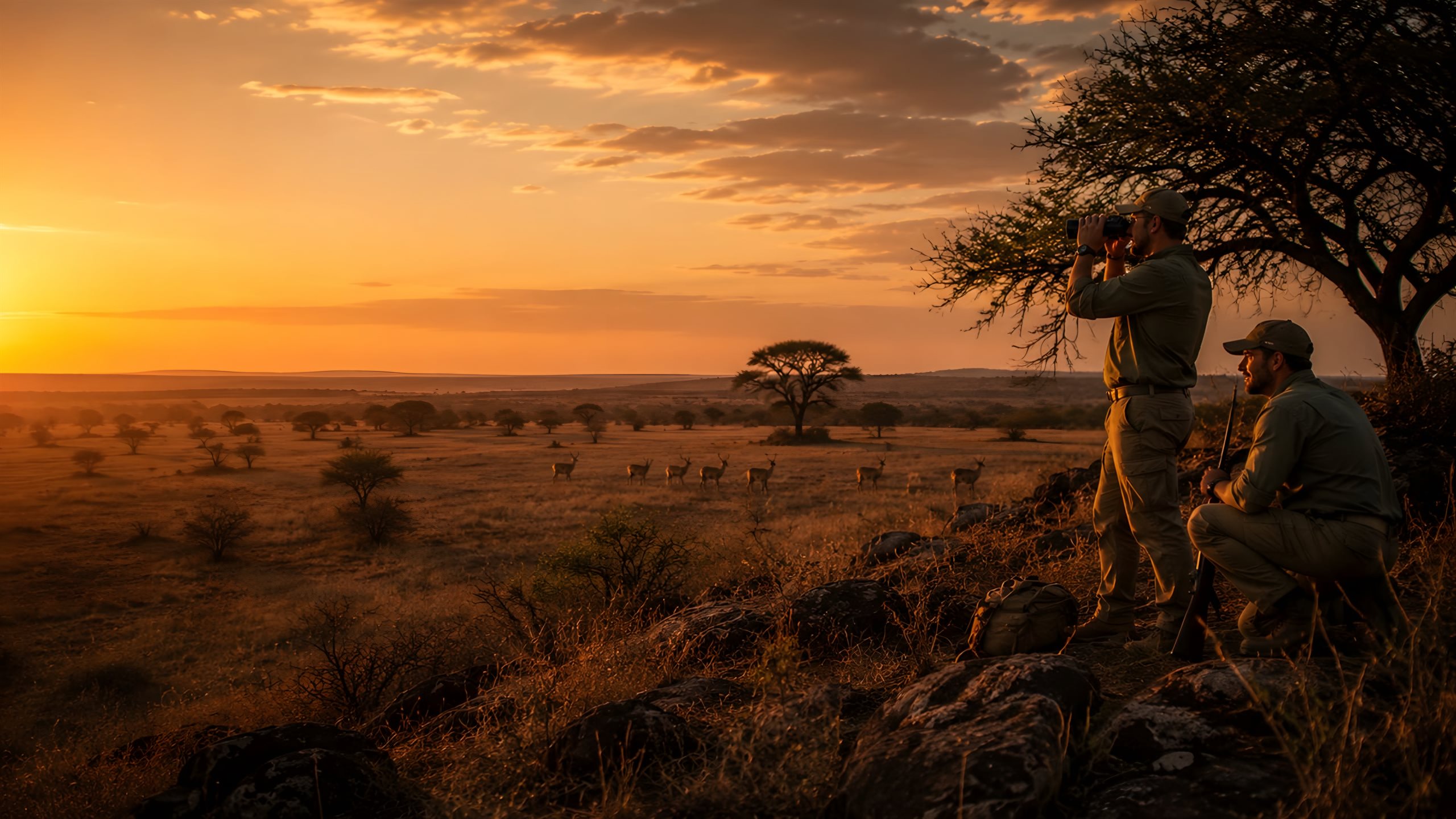
Visiting hunters consistently pack too much of the wrong thing. Camps do laundry daily, charter flights cap your bag weight, and the bush punishes noisy fabric and bright colours. This is a list built around what actually gets used.
In this guide
Clothing and colour
Three or four sets of quiet, breathable clothing in khaki, olive or brown is plenty — camps launder daily. Avoid blue and black entirely in tsetse-fly country, where those colours actively attract them, and avoid camouflage in some countries where it is restricted to military use. Layer for genuinely cold winter mornings and mild afternoons: a fleece and a light windproof jacket earn their space every day of a June hunt.
Boots and socks
Well-broken-in lightweight boots with ankle support, plus a second pair in case the first gets wet. Do not arrive with new boots — the classic first-safari mistake is blisters on day one of a seven-day walk-and-stalk hunt. Good merino socks matter more than expensive boots. Gaiters are worth it in thornveld.
Optics and shooting kit
Bring your own binoculars — 8x42 or 10x42 is ideal and you will use them constantly. Your PH has a spotting scope. Add a rangefinder if you own one, a rifle sling, a cleaning kit, and your ammunition in its own lockable container. A set of shooting sticks at home to practise with beforehand is worth more than anything else on this list.
Documents and money
Passport valid six months beyond travel with blank pages, visas if needed, firearm paperwork, the outfitter's invitation letter, travel and medical-evacuation insurance details, and vaccination records where required. Carry a modest amount of US dollars in small clean notes for tips and incidentals — cards work in cities but not in camp.
Medical and small essentials
Personal medication in original packaging with a copy of the prescription, a basic first-aid kit, sunscreen, lip balm, insect repellent, antihistamine, rehydration salts, and malaria prophylaxis if your area requires it. Add a headlamp, a power bank, a universal adapter (South Africa uses an unusual plug), earplugs and a small dry bag for cameras in dusty vehicles.
Weight limits — read this before you buy luggage
Light-aircraft charters to remote camps often cap baggage at 20 kilograms in a soft-sided bag, and hard suitcases may simply not fit through the door. Confirm the limit for every internal leg before you pack. A soft duffel plus a small daypack is the standard safari answer, and it is standard for a reason.