The Springbok Slam
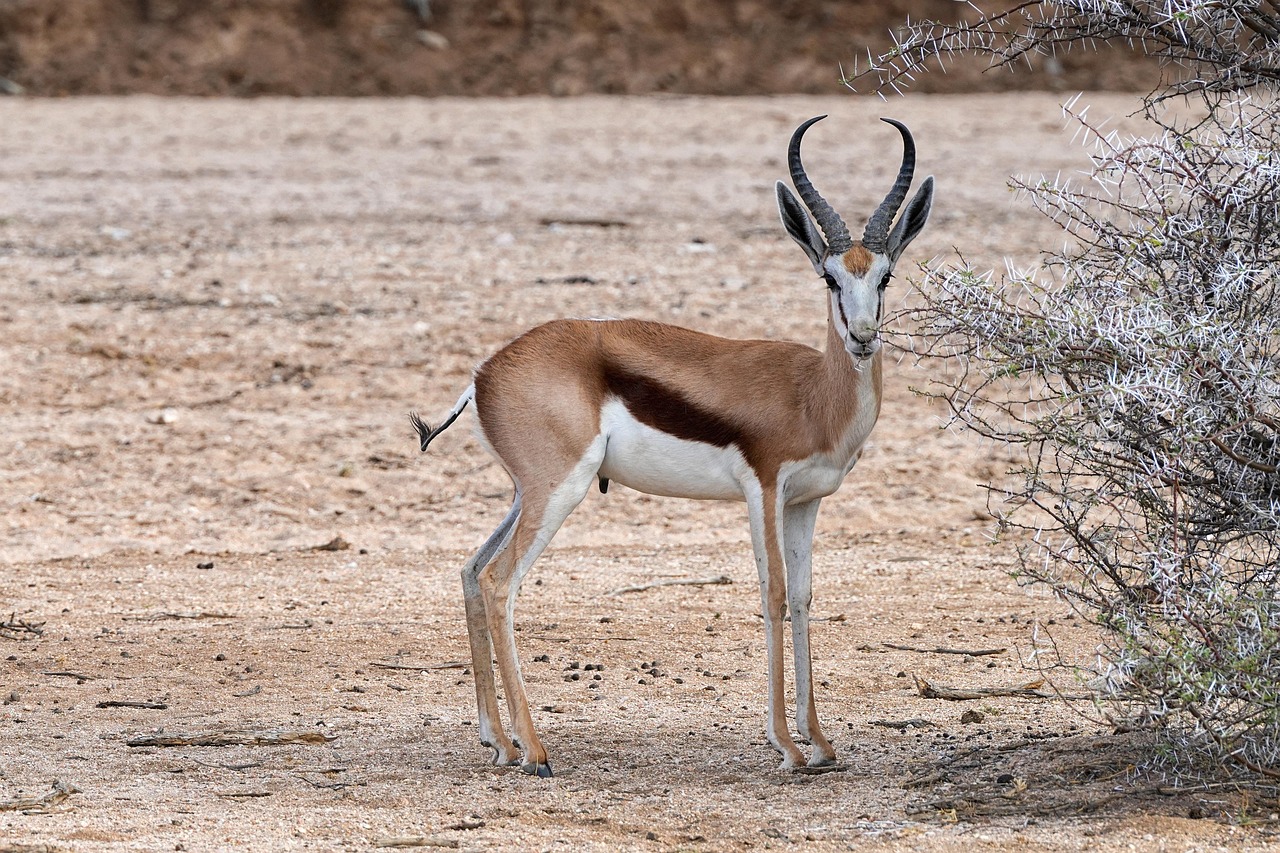
The springbok slam — a common, a black, a white and a copper ram — is the one famous African collection you can start and finish inside a single week, which makes it the perfect first slam and a favourite return-trip mission. Four strikingly different animals, one open-country rifleman's hunt, and a corner of the trophy room that visitors never walk past.
In this guide
The four-colour checklist
| # | Animal | Where | The short version |
|---|---|---|---|
| 1 | Common springbok | Karoo, Northern Cape, Free State, Namibia | South Africa's national animal — cinnamon and white with the chocolate side-stripe. |
| 2 | Black springbok | Same regions, established farms | A deep chocolate-black colour phase carried on a naturally occurring recessive gene. |
| 3 | White springbok | Karoo and Free State farms | Snow-white with ghost markings — the hardest of the four to judge against glare. |
| 4 | Copper springbok | Karoo, Kalahari-edge and Free State farms | A rich coppery body without the dark side-stripe; usually the priciest of the four. |
| 5 | Kalahari springbok (the purist's fifth) | Kalahari, Northern Cape and Namibia | The bigger-bodied northern race some collectors add to make it five. |
The national animal, four ways
The springbok is South Africa's national animal, the emblem on the rugby jersey, and the author of one of nature's great displays — pronking, the stiff-legged bouncing leap with the white dorsal fan flared that no one forgets seeing for the first time. The colour phases are not modern inventions: black and white springbok were recorded among Karoo herds well over a century ago, long before game ranching existed. What the ranching industry did was breed those naturally occurring recessive genes into stable herds, adding the copper phase, and in doing so created the most accessible collection in African hunting.
A slam in a single week
This is the whole charm: one or two farms in the Karoo, Northern Cape or Free State — or across the border in Namibia — can hold all four colours, and a focused hunter takes the slam in three to four hunting days. It slots perfectly into the front or back of a bigger plains-game safari, and it is the rare collection a first-time visitor to Africa can complete on trip one. Winter (May to August) gives the best skins for the taxidermist, and springbok skins deserve mounting — the colour contrast across the four is the entire point of the wall.
The shooting, honestly
Springbok country is open, flat and windy, and the animals stand barely knee-high at the shoulder. Shots run 200 to 350 metres, frequently prone or off sticks in a crosswind that matters at that size of target. It is the best pure rifleman's hunting in the plains-game book: a flat-shooting .243, 6.5 or .270 with quality bullets, dialled turrets or known holdovers, and the discipline to pass a shot the wind owns. Hunters who spend a week at it go home measurably better shots than they arrived.
Judging a ram
Both sexes carry horns; a mature ram's are heavier, closer at the base and hook inward at the tips into the classic lyre. The working benchmark: around 13 inches is a very good ram and 14-plus is exceptional, but the honest signal is shape and mass — deep curl, tips turning in toward each other, heavy bases on a thick-necked ram. On the black and white phases, judge shape against the sky rather than the body colour; the contrast fools range estimation both ways.
What the slam costs
Common springbok are among the most affordable trophies in Africa at roughly $350 to $600. The colour phases carry a premium: blacks around $600 to $900, whites $800 to $1,200, coppers $900 to $1,500. A complete four-colour slam typically lands between $2,500 and $4,500 in trophy fees — with the Kalahari race as an optional fifth for the purists — and the live listed prices on this platform show exactly what farms are charging today. One more thing every springbok hunter learns: the venison is by wide consent the finest in Africa. Eat well while you collect.
The springbok slam is the most postable week in African hunting — four colours in four days makes a feed thread people actually follow. Post each ram on the Telegraph and let your Trophy Room show the finished set.
Join free → Post it on the Telegraph →
Part of The Bush Telegraph — verified records live in your Trophy Room and on the leaderboards. Off-platform, we're @safarihunts on X.